


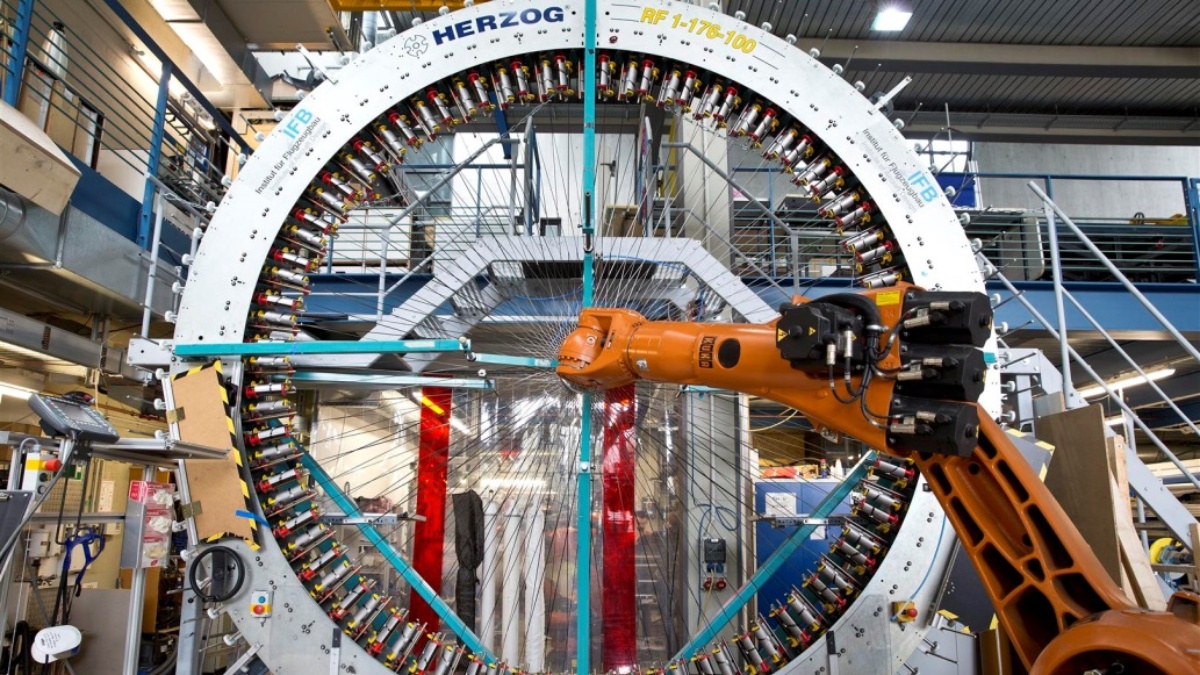
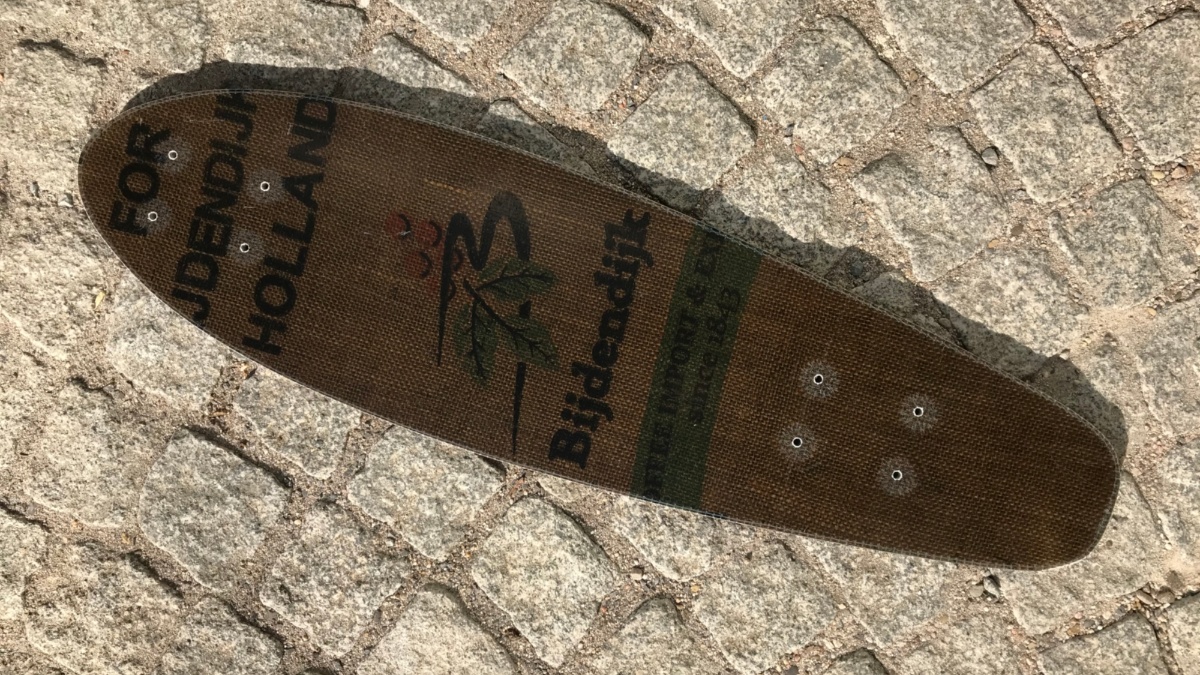

- CNC- and robot-based winding technologies
- Development of an automated overall methodology for the design and manufacturing of coreless wound fibre-reinforced composite structures
- Material-related developments (TowPreg) and functionalization
- Investigation of alternative and cost-efficient core systems.
Topic description
The field of fiber composite technologies is vast and subject to constant change. This section presents the IFB's current areas of research in the field of fiber composite technology.
Fields of research
Working groups
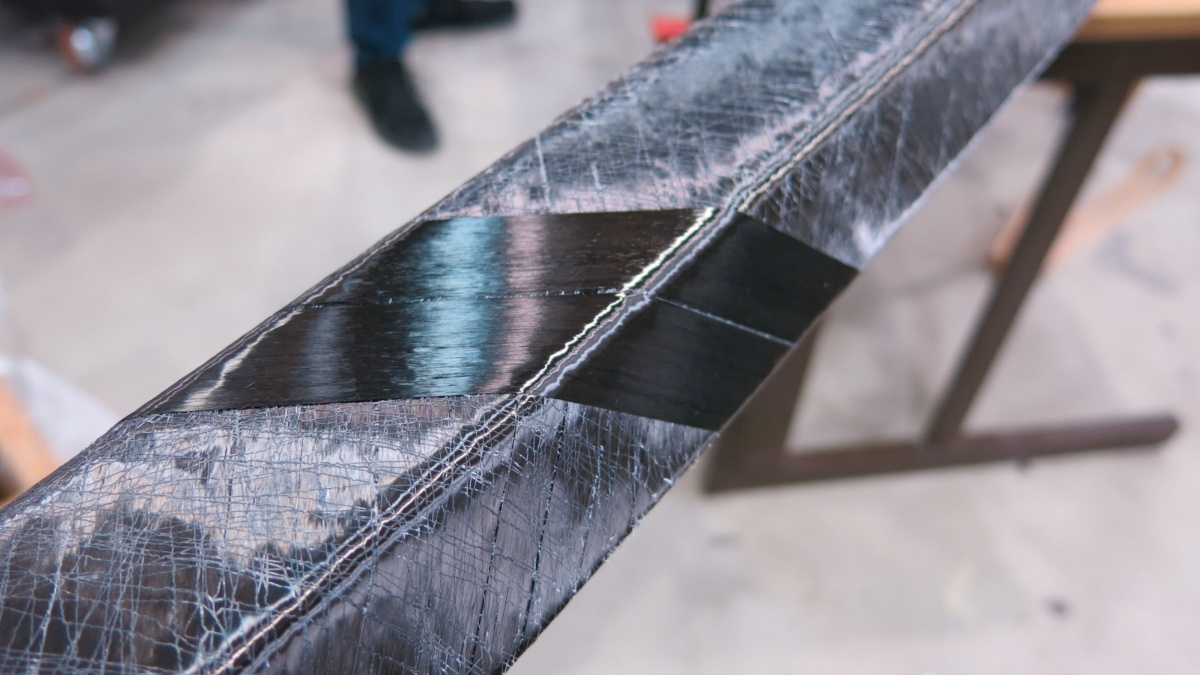
Working Group on Robotic Filament Winding
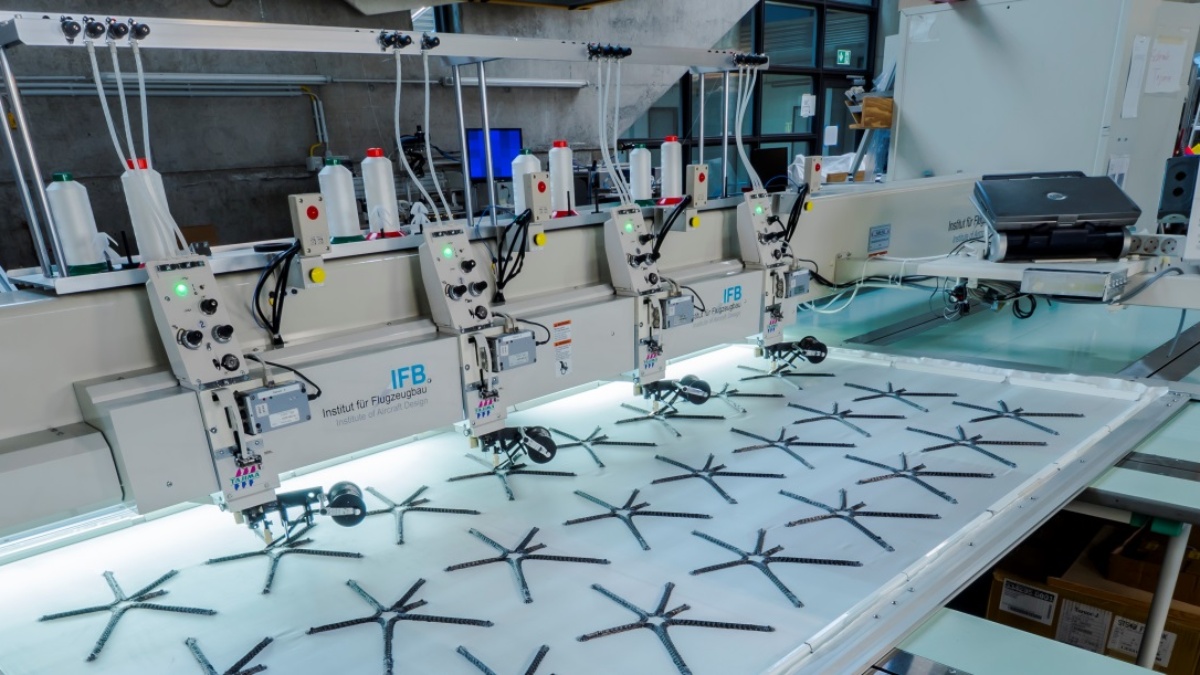
Working Group on Automated Fiber Placement – TFP Embroidery System in Operation
Fiber-Reinforced Composite Technology
Presentation of the Working Groups

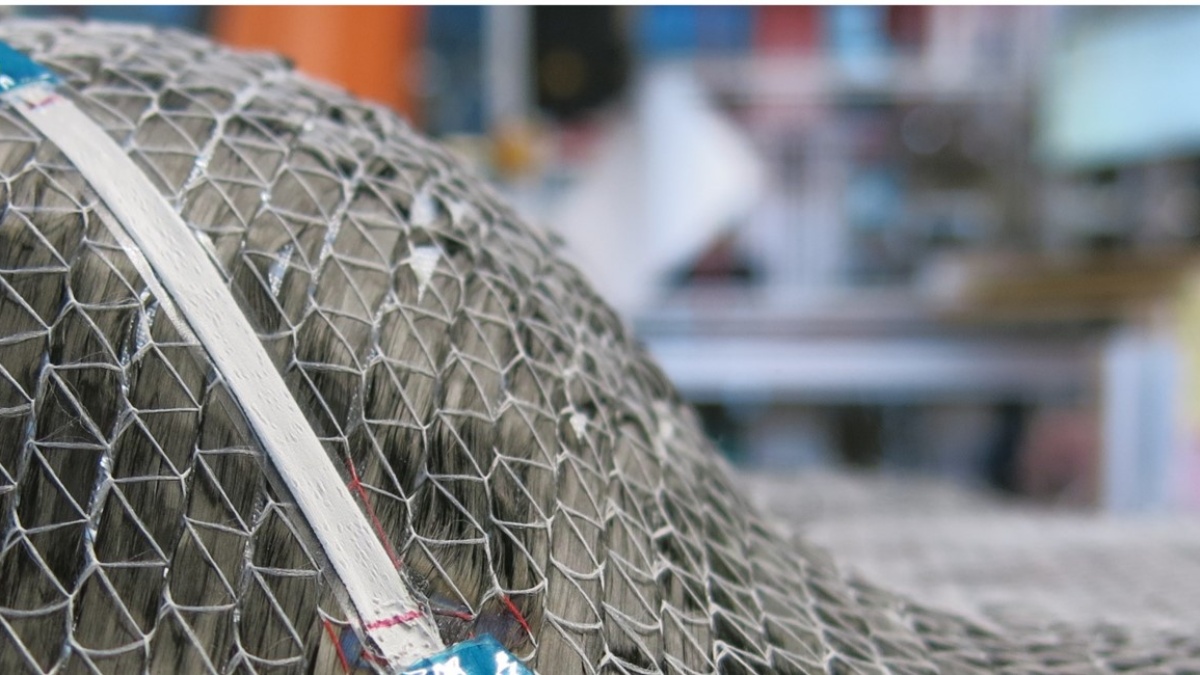
Braided structure in close-up
Working Group on Braiding
- Process-based component design
- Planning and optimization of manufacturing processes
- Production of complex hollow structures
- Tailoring of mechanical properties through process control
- Use of various fibre systems and material combinations.
More information about braiding

VARI Infusion
Liquid resin impregnation workgroup
- Process expertise and equipment (VARI/VAP, RTM, wet pressing, and autoclave curing)
- Investigation of new impregnation concepts (e.g., TowPreg); analysis and optimization of infusion processes through semi-finished product adaptation
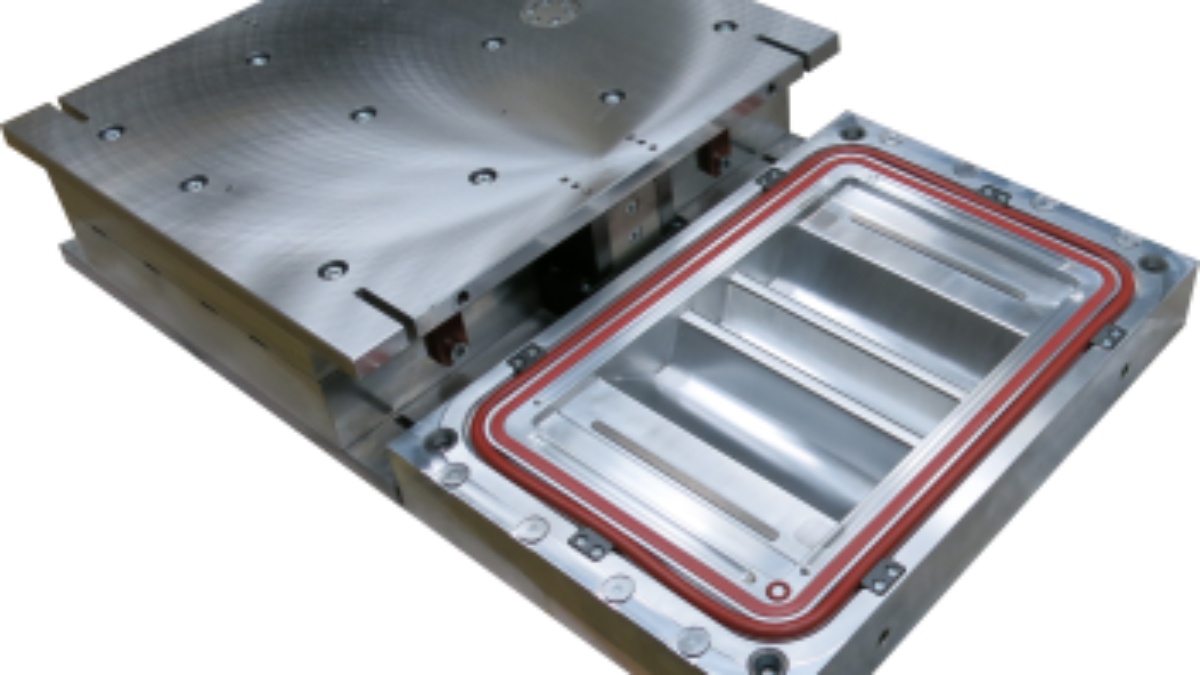
- Development of new tool concepts
- Investigation and evaluation of alternative resin systems (UV, transparent)More information on impregnation processes
More information on liquid resin impregnation
More information on TowPregs (spool-based impregnation)
More information on pressing processes (mechanically assisted impregnation)
More information on transparent fiber-reinforced plastics

Sensor integration
Working Group on Functionalization
- Development and investigation of textile sensor systems for the measurement of process and functional parameters enabling component-specific process control and structural health monitoring (SHM)
- Modification and enhancement of material properties through the addition of additives, e.g. graphene.
More information about functionalization
More information about graphene

Schematic of the draping test rig setup
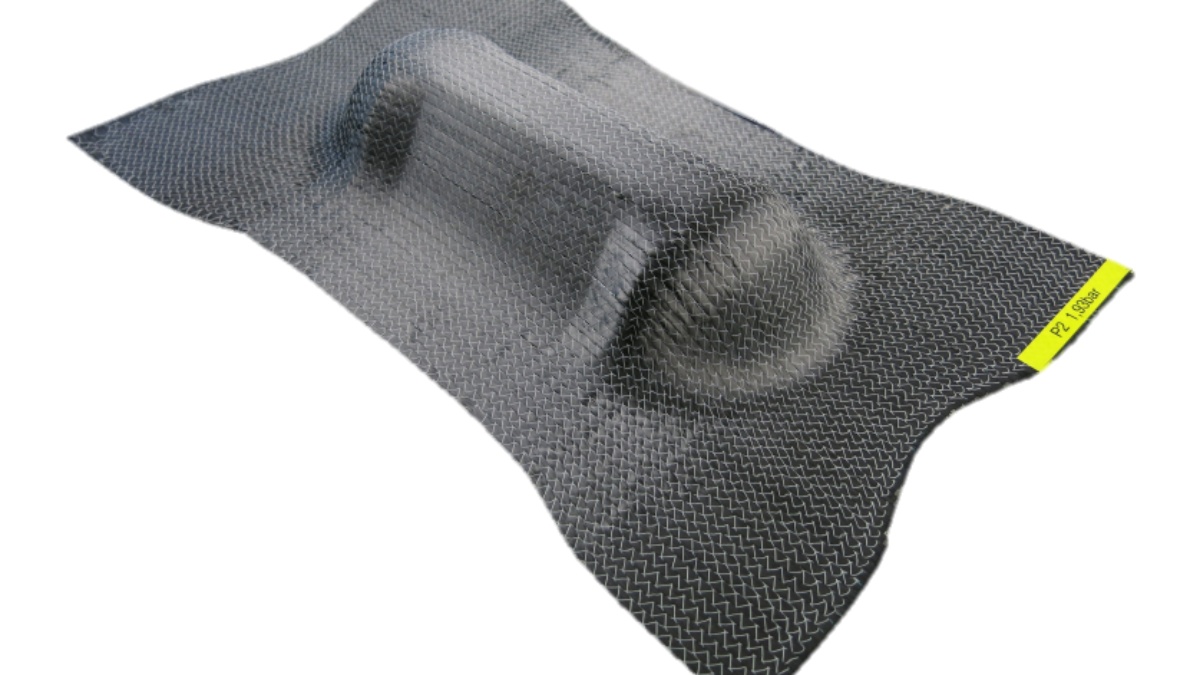
Working Group on Draping
- Forming of fibre-based semi-finished products and identification of textile effects
- Comparison between experimental reality and simulation as well as transfer of measurement data into structural simulation
- Development and integration of textile sensor systems with the aim of process optimization and automation; in-line process control based on real effects
- More information about.
More information about draping

Cross-layer head with thermal activation of the binder material
Working Group on Automated Fiber Placement
more information about Tailored Fiber Placement (TFP)
more information about CROSSLAYER (AFP)

TFP in application: flax chair in collaboration with ITKE (BioMat Group)
Working Group on Sustainable Composites
- Investigation of sustainable fibre and matrix systems
- Edge sealing and design of load introduction elements
- Adaptation of automated manufacturing processes; material-related development (fibre pre-treatment)
- Application of fibre placement processes with natural fibres
- Identification of new structural concepts and markets.
more information about Natural fibre-reinforced composite materials
more information about Tailored Fiber Placement (TFP)
Contact / Head of Department

Stefan Carosella
Dr.-Ing.Research Associate